Imagineering novel languages for the communication between human(s) and machine(s)
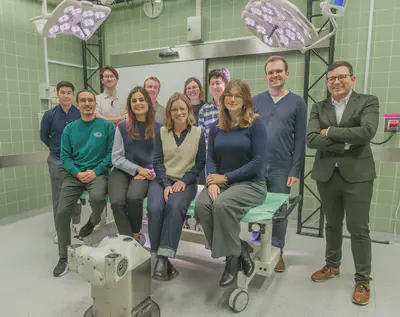
Established in 2021 and relocated to the Technical University of Munich (TUM) in 2023, the Human-Centered Computing and Extended Reality Lab aims to pioneer new technologies to enhance medical care and healthcare. We pursue fundamental, translational, and radical blue-sky research to improve medicine for patients and healthcare professionals.
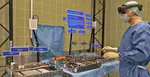
We adopt a holistic perspective on machine intelligence, emphasizing AI-driven technologies that enable meaningful collaboration between humans and machines. Therefore, we operate at the intersections of human-computer interaction, artificial intelligence, extended reality, robotics, and medicine. Exemplary research areas include AI-based assistance systems for surgical procedures, systems for diagnosing diseases and disorders, telepresence procedures, and robot-assisted rehabilitation measures.
We perform our research integrative as part of TUM’s School of Medicine and Health, TUM’s School of Computation, Information, and Technology, and the TUM University Hospital Department Clinical Medicine, affiliated with the Clinic for Orthopedics and Sports Orthopedics.
Wearable Technology, Biomechanical Motion Analysis, AI Applications in Clinical Biomechanics
Projects
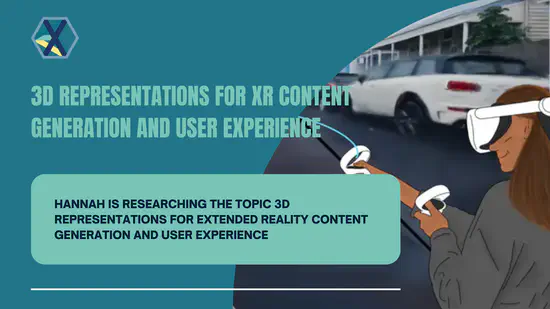
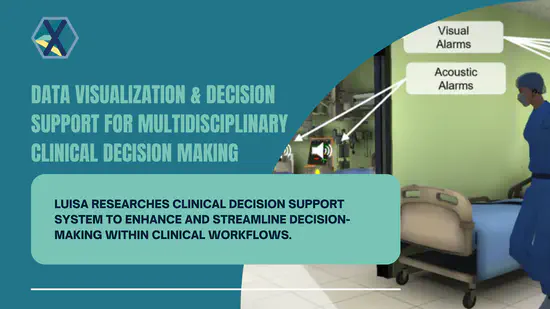
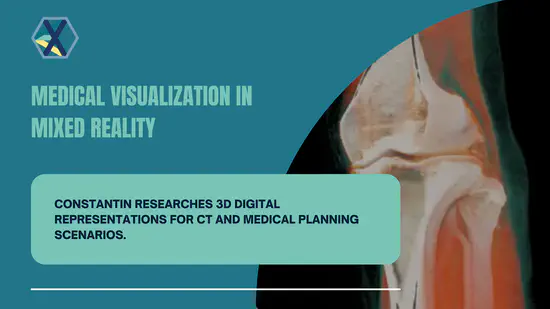
Our research is centered around the understanding, design, development, and evaluation of computing solutions and human-machine interfaces that improve the way we interact with, work with, and communicate through machines. A majority of our research considers AI driven Extended Reality user interfaces in the context of physical and mental health, such as Virtual-, Mixed- or Augmented Reality systems. Examples of these are assistive technologies for medical procedures or systems to assess and diagnose pathologies and disorders.
To do so, we strive for foundational, translational, and radical scientific contributions with high methodological and experimental quality. Our research is inspired by multiple disciplines, including but not limited to Computer Science, Psychology, Design, Medicine, and Neuroscience. We incorporate methods from these disciplines, such as computer vision, computer graphics, artificial intelligence, and user-centered design in a broad methodological bandwidth to support our research goals. We closely interact with partners from medicine and industry to incorporate different perspectives.
We offer theses in various research areas. Applications for thesis are considered to the dates 1st of April for the Summer Semester and 1st of October for the Winter Semester. We offer topics in the following areas:
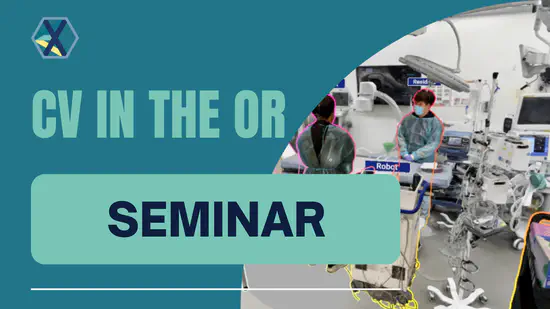
This seminar focuses on the latest methods for computer vision in the operating room.
Apply
Interested in working or researching with us? Find out more below. Depending on your career level, we offer different options.
We welcome, embrace, and respect diversity of people, identities, and cultures. We therefore encourage all potential fitting candidates, regardless of their personal background, to apply for the opportunity.
We encourage and embrace the visit and collaboration of junior and senior researchers for temporary stays in our lab. Find out more here.
Contact
Prof. Dr. Daniel Roth Technical University of Munich TUM University Hospital Machine Intelligence in Orthopedics Human-Centered Computing and Extended Reality Lab
Trogerstrasse 10, Munich, 81675
Find us on the third floor. Please direct postal deliveries to c/o Fritz Seidl, Ismaninger Str. 22